Tuesday, 23 July 2013

Photographers, meet your camera phone

Photographers, meet your camera phone 


The good: The Nokia Lumia 1020 smartphone's camera captures extremely high-resolution images with fine detail, and puts creative controls at your fingertips.
The bad: A niche device, the Lumia 1020 is $100 pricier than most high-end smartphones. The lens makes it a little bulky. Multiple camera apps are confusing. It lacks manual f-stop control and presets for common shooting scenarios.
The bottom line: Avid mobile photographers will love the Nokia Lumia 1020's exact controls, but casual users should stick to cheaper camera phones.
You can sum up the Nokia Lumia 1020 in three words: 41, megapixel, camera.
It's the Lumia 1020's high-octane shooter -- along with Nokia's custom camera app -- that defines this next marquee Windows 8 phone, and that gives mobile photographers a reason to salivate. In the 1020, Nokia pushes the smartphone camera envelope with a combination of raw image-capturing prowess and close-cropping capability that makes it one of the most artistically able smartphone cameras we've tested.
Would we ditch our point-and-shoot cameras and rely on the Lumia 1020 instead? For day-to-day and weekend events, absolutely; the 1020 is the ultimate in convenience and approaches point-and-shoot quality. However, based on our tests so far, Nokia still has a ways to go before it can completely supplant the need for a higher-level standalone camera. We'd take it away for the weekend, but wouldn't use it to shoot our kid's first birthday.
The 1020's $299.99 on-contract price with AT&T is too steep for casual users, who can capture high-quality everyday stills and videos with handsets that cost $200 or less. Serious photographers, however, will appreciate the phone's genuine two-in-one capabilities. The Lumia 1020 also is sold globally.

Design and build

The first thing you're probably asking yourself is if owning the Lumia 1020 is like carrying a bulky point-and-shoot camera in your pocket. Blessedly, it is not.
Compared with the chunky Galaxy S4 Zoom and bulbous Nokia 808 PureView (the company's first attempt at a 41-megapixel phone), the Lumia 1020 seems only slightly thicker than the Lumia 920 and 928, both of which it physically resembles.
(Credit: Blake Stevenson/CNET)
Dimensions of 5.1 inches tall by 2.8 inches wide are pretty standard, and the 1020 measures 0.4 inch thick throughout most of its body. It's that large camera module on the back (about 1.75 inches in diameter) that protrudes a full 0.51 inch from the phone's face.
That means the phone won't lie flat on its back, which is surprisingly sometimes helpful when the face tilts toward you as if on a stand. Amazingly, I did carry the phone around in my back pocket for long stretches without noticing it too much. When I held it, my fingers adjusted to grip the 1020 below its bulge.
Keeping the phone this slim was quite the design feat, especially when you compare the 1020 with the chunky S4 Zoom, which is shaped more like a point-and-shoot with a smartphone attached.
Nokia Lumia 1020
A huge camera module defines the Nokia Lumia 1020.
(Credit: Sarah Tew/CNET)
At 5.6 ounces, the matte yellow, white, or black 1020 is hefty, sturdy, and undeniably solid. I'm used to carrying heavy bags and backpacks, so the weight didn't particularly bother me, but those who travel light will notice the 1020's density right away. We tested the phone in all three colors; the white version picked up smudges most readily, but they wiped off easily enough from the polycarbonate material.
Nokia pulled off a design feat in keeping the large camera mount from sticking out too far.
(Credit: Josh Miller/CNET)
Like all the Lumia 920-series phones, the 1020's 4.5-inch display features a 1,280x768-pixel resolution (WXGA) and pixel density of 334ppi. Its AMOLED screen is also supersensitive, which means you can operate it with fingernails or gloved fingertips. Gorilla Glass 3 helps resist cracks, though smash any screen hard enough or often enough and it'll break.
In keeping with the Lumia design philosophy, you'll find oblong volume, power/lock, and camera shutter buttons on the right spine, and the headset jack and micro-SIM card slot up top. In addition to the front-facing camera there are three capacitive navigation buttons on the front, and the Micro-USB charging port is down on the bottom edge. On the back, the massive camera module includes a wide xenon flash and a six-lens Carl Zeiss lens, plus an LED sidekick that's mainly used for focus.
The Lumia 1020 does not lie flat.
(Credit: Josh Miller/CNET)
A completely sealed unibody device, the Lumia 1020 doesn't have a removable battery or microSD card storage, which may make avid photographers jittery about storage limits, especially with large photo files.

Understanding the camera

The most important thing to know is that the Lumia 1020's 41-megapixel shooter doesn't actually give you 41-megapixel pictures. In fact, not much about the camera or its software is particularly straightforward.
Here's what's essential:
1) The Pro Cam app creates 5-megapixel photos. In addition, it also saves a high-resolution image of each one. If you crop in tightly, your photo looks even more detailed. I recommend CNET camera guru Joshua Goldman's must-read explanation of what's going on with this particular type of lossless zoom.
Nokia Lumia 1020 camera test
Nokia Pro Cam is the 1020's default camera app, but you can also switch among other apps, or change the default in Settings.
(Credit: Screenshot by Jessica Dolcourt/CNET)
2) By default, the Lumia 1020 takes photos using Nokia's Pro Cam app. Not to be confused with Nokia Smart Cam, Pro Cam gets you sliding controls for flash, exposure, ISO, and focus among other settings. Nokia Pro Cam is technically a "lens," a separate camera app that supplants the native camera. You can only capture the higher-resolution images using Pro Cam.
Nokia Lumia 1020 camera test
Choose resolution and aspect ratio in the Pro Cam app settings.
(Credit: Screenshot by Jessica Dolcourt/CNET)
Making matters more confusing still, the size of the high-resolution photo you shoot depends on your camera settings. Pick a 16:9 aspect ratio, and the phone saves a 34-megapixel shot in addition to the 5-megapixel picture you eventually see and share. A 4:3 aspect ratio gives you a 38-megapixel file in addition to the smaller snap. You won't see these choices -- or any resolution options -- when using the native camera app.
You'll only be able to upload and share the smaller file size from the 1020; if you want all 34 or 38 megapixels, you can access the raw files through a computer connection.
In some cases, the 1020's creative settings are no big deal. Most smartphone cameras have many of these within submenus. The difference here is that surfacing them on the app's top layer makes them a lot quicker to access, set up, and change from shot to shot.
One setting is conspicuously absent for serious photographers, and that's the power to manually change the depth of field. It also threw CNET's photographers that the "live preview" of manual controls that you see on the screen before taking a picture often didn't represent the actual image once it was captured.
Nokia Lumia 1020 camera test
CNET editors help demo the Nokia Pro Cam app.
(Credit: Screenshot by Jessica Dolcourt/CNET)
In the menu, you can switch to the front-facing camera, get at settings, and launch the tutorial. Unlike the Galaxy S4 Zoom, there aren't mode presets for night shots, sports, or other common scenarios, so it helps to know what you're doing, or have the patience to play around.
I'm not sure why there's no onscreen control for the front-facing camera; digging into the menu just seems like an unnecessary step. It's also a little strange that there are two buttons for reviewing your photos. One reviews the last shot you took, the other lets you get at your whole photo stream. Unfortunately, you can't swipe to the left as you can in the phone's native app to access your camera roll.
Nokia Lumia 1020 camera test
I don't like having to dig into settings to use the front-facing camera, but I do like having easy access to the tutorial.
(Credit: Screenshot by Jessica Dolcourt/CNET)
There are cursory editing tools you can access when you review a photo, including rotation and a sort of cropping tool that changes the aspect ratio to 4:3, 3:2, 1:1, and 16:9. I wish that Nokia had included a more robust suite of editing features here. Instead, you'll have to swap to a different editing app if you want to crop or auto fix. Luckily, the 1020 makes this fairly easy to do from the settings when you access photos through the review strip.
Nokia Lumia 1020
Sliding controls let you adjust exposure, ISO, brightness, and white balance.
(Credit: Sarah Tew/CNET)

Image quality

To test how well the Lumia 1020 backs up its claims of photog greatness, I shot dozens of pictures with both the Pro Cam app and the native app, using a combination of automatic modes and fancier settings. Full disclosure: I'm a completely casual photographer, so my photos here represent the perspective of an average user. For the more-artistic shots, I enlisted the help of CNET photographer James Martin and CNET camera editor Joshua Goldman, who independently called the Lumia 1020 a "really good smartphone camera" after taking their own rounds of test shots.
Many pictures I took looked fantastic in terms of color, contrast, and detail -- especially fine detail like a visible background cobweb. When an image was focused correctly, the camera's lossless digital zoom also produced terrific detail, just as Nokia promises.
I never took a bad photo with the 1020. That said, not every photo was a complete hit. Of course, even good cameras can take the odd bad picture if conditions are off. Sometimes, I wasn't sure that another high-end smartphone couldn't have taken the photo just as well.
Edges usually appeared sharp to my eyes, but then some centers sometimes lacked shadows, detail, and depth. I also had a hard time nailing great portraits. Lighting was sometimes off, and faces often appeared a tinge out of focus. That can cause problems when taking photos of a group. Overall, my photos of objects were a lot more beautiful than my pictures of people. James and Josh had much better luck with portraits; photo enthusiasts should take my results with a grain of salt.
This kid clearly loves his snack. Click to enlarge.
(Credit: James Martin/CNET)
I also noticed that the 1020 seems to color-correct a couple of seconds after taking a picture. When using the flash, photo color also grew warmer, yellower, which can be a little weird. Then again, yellow is better than the blue cast you sometimes get when taking photos with a flash.
Since the Pro Cam app saves pictures in one small and one large resolution, the camera takes longer to reload. Instead of shot-to-shot times about 2.5 seconds apart, it's about a 6-second wait before the Lumia 1020 is ready for the next round.
I will say that I got some terrific pictures of objects even in the Pro Cam app's automatic mode. That and being able to crop in tight on an element without losing detail definitely made me want to take a lot more photos than I normally would.
Unless otherwise specified, the following pictures were taken using automatic settings, and have been resized. To see more of what this camera can do, check out this Lumia 1020 photo gallery and a camera showdown between the Lumia 1020, Samsung Galaxy S4, and iPhone 5.
Nokia Lumia 1020 camera test
Shoot outdoors using Pro Cam. Click to enlarge.
(Credit: Jessica Dolcourt/CNET)
Nokia Lumia 1020 camera test
Taken with the 1020's native camera app. Click to enlarge.
(Credit: Jessica Dolcourt/CNET)
Nokia Lumia 1020 camera test
Full-resolution crop.
(Credit: Jessica Dolcourt/CNET)
Nokia Lumia 1020 camera test
This grape cluster, shot with the native camera app, was one of my favorites of the bunch. Here it is at full resolution, no cropping.
(Credit: Jessica Dolcourt/CNET)
Nokia Lumia 1020 camera test
Despite focusing on the palm trees, this landscape shot, taken on an overcast day, looks a little soft. Click to enlarge.
(Credit: Jessica Dolcourt/CNET)
Nokia Lumia 1020 camera test
Words to live by. Click to enlarge.
Nokia Lumia 1020 camera test
The text looks great even cropped close. Click to enlarge.
(Credit: Jessica Dolcourt/CNET)
Nokia Lumia 1020 camera test
Keep cropping ever tighter, but know that once you save an image this way, you can't revert.
(Credit: Jessica Dolcourt/CNET)
I've cropped in so tightly on this text, the 100x112-pixel image below is as large as it gets:
Nokia Lumia 1020 camera test (Credit: Jessica Dolcourt/CNET)
Nokia Lumia 1020 camera test
This full-resolution crop of the leaf and grass looks great.
(Credit: Jessica Dolcourt/CNET)
Nokia Lumia 1020 camera test
Here's a full-resolution crop of the same image, drawing from the 1020's saved higher-resolution image.
(Credit: Jessica Dolcourt/CNET)
Nokia Lumia 1020 camera test
The Lumia 1020 was fantastic at switching focal points. This picture snaps onto the foremost cluster. Click to enlarge.
(Credit: Jessica Dolcourt/CNET)
Nokia Lumia 1020 camera test
Here, the rear cluster is the photo's main subject. Click to enlarge.
(Credit: Jessica Dolcourt/CNET)
Nokia Lumia 1020 camera test
Here's another exercise in playing with focus. Click to enlarge.
(Credit: Kristina Rosa/CNET)
Nokia Lumia 1020 camera test
Click to enlarge.
(Credit: Kristina Rosa/CNET)
Nokia Lumia 1020 camera test
Tacos, anyone? Click to enlarge.
(Credit: Jessica Dolcourt/CNET)
Nokia Lumia 1020 camera test
The Pro Cam app made the appetizer appear yellower after I took the photo. The fried shallots look focused, but the yellow sauce isn't as well defined.
(Credit: Jessica Dolcourt/CNET)
Nokia Lumia 1020 camera test
This flower bouquet was shot indoors at night using the native camera app. It's sharp, but the blooms lack depth, especially the white ones. Click to enlarge.
(Credit: Jessica Dolcourt/CNET)
Nokia Lumia 1020 camera test
Shot outdoors at night using the Pro Cam app: 1/400s shutter speed, ISO 800.
(Credit: Jessica Dolcourt/CNET)
Nokia Lumia 1020 camera test
Full-resolution crop, shot at 1/800s shutter speed and ISO 4,000.
(Credit: Jessica Dolcourt/CNET)
Once again, the Lumia 1020 is good enough to abandon your point-and-shoot for much of the time, but it still lacks some manual controls that more serious photographers will want for momentous occasions.
You can compare some smartphones' image performance in our periodically updated gallery of studio shots.

Video and front-facing camera

The Lumia 1020 shoots clean, smooth 1080p HD video -- once you change the default from 720p HD video in the settings. The same clear zoom the Nokia boasts for its still camera extends to video as well when you use the 3x digital zoom in the Nokia Pro Cam app. Nokia has hidden zoom gestures in the app. You can pinch to zoom while shooting, but you can also swipe up to zoom in and swipe down to zoom out.

Zooming in actually worked pretty well in my tests; for instance, patterns in rugs and faces showed up pretty clearly when I zoomed. Audio capture was my one complaint with taking video using the native camera app; my voice rang loudly -- almost too loudly -- while my subjects standing a few feet away were hard to hear. Nokia's "rich recording" in its Pro Cam app seems to have captured clearer sound.
Reviewing the Pro Cam video prompts you to install Nokia Video Trimmer from the app store. This is yet another tool that boosts Nokia's Windows phone capabilities, though it would be far more valuable to include that in the photo apps from the start.
For its front-facing camera, the Lumia 1020 plugs in the same 1.2-megapixel wide-angle lens we get on the Lumia 920 phones. Its 720p HD video recording is a boon for video chats. I was impressed with front-facing image quality on this camera, which was wide enough to take in my surroundings and tell a vibrant visual story when I shared photos with friends.
Nokia Lumia 1020 camera test
Documenting the food truck scene with the front-facing camera using the Pro Cam app.
(Credit: Jessica Dolcourt/CNET)

OS and features

The Lumia 2010 runs a version of Windows Phone 8 that's been slightly modified to accommodate the phone's enormous 41-megapixel camera.
You won't notice any difference on the front end, though, which looks and behaves like any other Nokia Windows phone. The usual complement of Nokia apps includes Nokia Music, Here-branded maps and driving apps, and a couple of extra photo tools in Nokia Pro Cam (of course), Nokia Smart Cam, Panorama, and Cinemagraph. AT&T also has its say with a suite of apps that include AT&T Radio and a family map.
Other key features include NFC for Tap + Send, and Bluetooth 3.0 (which could soon turn into 4.0). There's no integrated wireless charging on the 1020, but you can buy an aftermarket back cover if that's your jam.
Shutterbugs will more likely seek out other camera accessories, like a tripod case, or the camera grip case ($79) that really does convert your 1020 into a point-and-shoot camera, hand grip included.
A Nokia Lumia 1020 accessory turns your phone into a point-and-shoot.
(Credit: Josh Miller/CNET)
Nokia Lumia 1020 with camera case.
A closer look at the 1020's camera case.
(Credit: Sarah Tew/CNET)

Performance

Call quality
I tested the Lumia 1020's call quality (GSM 850/900/1800/1900) using AT&T's network in San Francisco.
When speaking in a quiet spot indoors, I kept volume at level 5 of 10, but pumped it up when it was noisier outdoors. Voices didn't sound completely natural. Instead, they came across a little flat, robotic, and lispy. There weren't huge distortion spikes or blips, but the audio weirdness persisted throughout my calls. I could still carry on conversations, but I definitely noticed that my caller sounded off. One high point is that the 1020's sound was absolutely clear, with no background noise.
On his end of the line, my test caller says I sounded a little distorted on the peaks, with occasional gargling. Otherwise, I sounded clear and comfortably loud, though my voice also sounded overly sharp in almost an uncomfortable way. The muddiness and crispiness made the call OK overall for my main test caller, but it wouldn't be his top choice. He gave it a B to B-.
Nokia Lumia 1020 call quality sample Listen now:

Speakerphone was impressive on my end when I tested it at hip level; I could tell I was shooting out audio through the speaker, but it mostly sounded good. Volume was the biggest problem: I had to boost it to the highest level to hear conversation clearly, even indoors. Still, the phone wasn't echoey for me. I could see myself using this to take a conference call or to talk while driving.
Unfortunately, speakerphone quality tanked for my caller. He called it "muddy" and said it emphasized rather than reduced that telltale speakerphone echo. He said he would have a hard time hearing amid any ambient noise.
Data, processor, battery
AT&T's 4G LTE blazed on the Lumia 1020 in my San Francisco tests, consistently delivering speeds in the double digits.
I often saw diagnostic results ranging from 15Mbps to 38Mbps down and 5Mbps to 15Mbps up. In real-world tests, even graphically rich desktop versions of Web pages loaded pretty quickly and completely. Apps and photos downloaded fast as well, and status updates and pictures uploaded without much wait.
Nokia Lumia 1020 diagnostic speed test
Some diagnostic test results using the Free Speed Test for Windows Phone.
(Credit: Jessica Dolcourt/CNET)
Like other Lumias, the 1020 has a 1.5GHz dual-core Qualcomm Snapdragon S4 processor. Although it isn't as fast as Qualcomm's quad-core processor, this is as speedy as you get in a Windows Phone, and it's a plenty quick chipset. Gameplay was engaging with Xbox games and others.
Nokia Lumia 1020 (AT&T) Performance
Download Endomondo (3MB) 19.5 seconds
Load up Endomondo mobile app 4.1 seconds
CNET mobile site load 5 seconds
CNET desktop site load 13.7 seconds
Boot time to lock screen 30.7 seconds
Camera boot time 2.8 seconds
Camera, shot-to-shot time Pro Cam: 6 seconds with flash and focusing;
Native: 2.5 seconds
The Lumia 1020's 2,000mAh battery has a rated talk time of 13.3 hours over 3G. We'll conduct independent battery drain tests as well. This is the same battery capacity as the Lumia 920 line, and just like those phones, this one should continuously last a full workday before needing a charge. Keep in mind that batteries do degrade over time.
There are 32GB of memory on the Lumia 1020, which is enough for most people. The Nokia Pro Cam's large photo format will suck up more space than others, so that might make some jittery. Still, I took and kept dozens of shots without running close to the barrier. The 1020 does come with 7GB of free SkyDrive cloud storage, though, with an option to upgrade to more. The 1020 has 2GB RAM, rather than the other Lumias' 1GB RAM.
FCC tests measure a digital SAR of 0.82 watts per kilogram for this phone.

Buy it, skip it, or hold out?

This is clearly a camera phone that helps define a new era of smartphone photography. Its larger sensor, up-front creative controls, and incredible lossless cropping really make it stand out from the crowd. However, for casual users, there may be more camera -- and bulk and a higher price -- than necessary, especially when smartphones like the Nokia Lumia 920 models, the iPhone 5, the Samsung Galaxy S4, and the HTC One produce some really great snaps to upload and share.
For purists, the Lumia 1020's sensor size may be smaller than Nokia's Symbian-running 808 PureView antecedent, but that helps it achieves a pocket-friendliness it may not otherwise have had. I have some complaints about the Pro Cam app's look and layout, but these are minor issues at the end of the day.
Samsung Galaxy S4 Zoom
Samsung's Galaxy S4 Zoom has a 10x optical zoom lens.
(Credit: James Martin/CNET)
Although I won't be able to compare image quality with Samsung's 16-megapixel Galaxy S4 Zoom until my review unit arrives, I can say that when I handled it briefly, the Zoom's settings didn't strike me as being as ambitious about absolute image control as Nokia demonstrates here. That said, I do expect that its 10x optical zoom and easy-access shooting modes (like night, portrait, and sports) will challenge the Lumia 1020.
If you're deciding between the S4 Zoom and the Lumia 1020, you're investing in a pricier-than-usual two-in-one device either way. Hold out for our Zoom review if you think you may prefer this Galaxy S4 version's optical zoom. Ditto if you value preset shooting modes for common scenarios, like night mode, and don't mind a smartphone the size of a point-and-shoot camera.
Buy the Lumia 1020 if you:
- Subscribe to AT&T
- Are a photography enthusiast willing to invest in a pricier two-in-one device
- Crave precise control over exposure and other settings
- Often carry around a point-and-shoot or dSLR
- Consider yourself an avid photographer
Skip the Lumia 1020 if you:
- Are looking for a slim or budget smartphone
- Prefer preset scenarios to help photograph a scene
- Highly value fast shot-to-shot times
- Are happy with your current smartphone camera
- Dislike Windows Phone OS

Leap Motion controller now shipping, coming to Best Buy on July 28

The Leap Motion 3D gesture controller is now shipping following an unexpected delay. It was initially scheduled to ship on May 13, but CEO Michael Buckwald said back in April they simply needed more time to test the device before deploying it in the wild.
In a post on the company blog, Leap said they started shipping pre-orders last week and some have already received the device. They are dispatching hundreds of thousands of units to more than 150 countries but due to high demand they are still processing pre-orders at this time. The company promised not to rest until all placed orders are delivered.
If you are not familiar with the Leap Motion controller, it’s a flash drive-sized module that is able to track the movement of all 10 fingers on both hands in an area of eight cubic feet. It’s much more sensitive than the Kinect as it can detect movements of just 0.01 millimeters although it's designed for close quarters operation rather than room-filling fun like Microsoft's solution.
The device works with specialized apps found in the Leap Airspace Store. At present, there are 75 or so apps to choose from including games, productivity apps and creative tools. Most are either free or cost a couple of bucks to purchase.
If you’re the type that likes to check out a product in person before making a purchase, you can head to your local Best Buy starting July 28 to pick one up. Otherwise, you can order through the company’s online store for around $80 plus shipping.

Download VLC for iOS, now with AirPlay and Dropbox support

Undoubtedly, one of the most popular open source media players available today is VLC, and it's been that way for quite some time now. As a project backed by many well versed contributors it's available in a wide range of platforms: Windows, Mac, Linux, Android and now once again iOS.
Being an open source project, as long as you oblige the GNU license agreement, it's perfectly fine to distribute and port to practically any environment. Based on that premise Applidium posted a port of VLC on the App Sore a couple of years back, but due to an incompatibility of licensing terms it was ultimately removed by Apple. Fortunately, for the millions of us who use software and are interested in taking its functionality on the go, VLC is back on the App Store, this time officially backed by the VideoLAN team.
The new version 2.0.1 can handle all major video formats including MKVs, as well as audio tracks and subtitle tracks. It also includes support for network streams like HLS and MMS, Bluetooth headsets, AirPlay and Dropbox integration. For more details on features and requirements, as well as the download link for the App Store and Jailbroken devices running iOS 5.1 or later, just click here.

TV station taps copyright law to erase embarrassing broadcast

After racist gaffe following San Francisco plane crash, KTVU uses the Digital Millennium Copyright Act to have clips of the event removed from the Internet.
 
A San Francisco Bay Area television station that became world famous for a racist gaffe during a news broadcast about a deadly plane crash is apparently trying to erase the event through copyright law.
Six days after Asiana flight 214 crashed at San Francisco International Airport on July 6, KTVU morning anchor Tori Campbell said the station had just confirmed the names of the pilots and proceeded to read them out loud as they were simultaneously displayed on viewers' screens. The names read by Campbell -- "Captain Sum Ting Wong," "Wi Tu Lo," "Ho Lee Fuk," and "Bang Ding Ow" -- were confirmed by an intern at the Federal Aviation Administration but apparently not read out loud at the station until the broadcast.
While Campbell and the station quickly issued an apology, that did not stop clips of the broadcast from flooding video-sharing sites and social networks. But the Fox TV affiliate has arrived at a novel solution to its embarrassing moment: the Digital Millennium Copyright Act, which requires Web sites to remove copyrighted material at the copyright holder's request.
Some of the videos uploaded by viewers have vanished from the Internet, replaced by messages that say, "This video is no longer available due to a copyright claim by KTVU."
While the station certainly has the legal right to protect its copyrighted materials, that is not the primary goal behind the clip-removal campaign, according to Tom Ramponi, the station's general manager and vice president.
"The accidental mistake we made was insensitive and offensive," Raponi told MediaBistro today. "By now, most people have seen it. At this point, continuing to show the video is also insensitive and offensive, especially to the many in our Asian community who were offended. Consistent with our apology, we are carrying through on our responsibility to minimize the thoughtless repetition of the video by others."
Three people died and more than 180 were injured when Asiana's Boeing 777 crashed into the runway while attempting to land at San Francisco International Airport.
A clip of the broadcast is embedded below. Please note that racially insensitive content is included.

How to spot and avoid Facebook 'Like' scams

How to spot and avoid Facebook 'Like' scams

When you click or press the Like button, you may be disclosing more about yourself than you imagine. You may also be contributing to the bank accounts of Internet scammers.
Facebook "likes" mean money. Individuals and businesses of all types -- legitimate and otherwise -- use various techniques to persuade you to click that ubiquitous thumbs-up button.
Begging for Facebook "likes" has become epidemic. "If I get a million likes I'll be cured of my terminal disease and I'll be able to implement my sure-fire plan for world peace!"
"If you don't like this picture you hate your mother, America, and apple pie."
Yeah, right.
Scammers prey on Facebook users' propensity to respond emotionally by clicking "Like" when an image or plea tugs at their heart strings or piques their ire.
Scam sites offer to sell you likes clicked by real-live humans. The buyers intend to convert the clicks into traffic for their Facebook page, which translates to increased ad revenue. Several such sites I visited appear to be owned by the same anonymous party and are registered in Panama.
The Facebook Help Center states unequivocally that you cannot buy likes:
Certain websites promise to provide large numbers of likes for your Page if you sign up and give them money. These websites typically use deceptive practices or are scams. People who like your Page this way will be less valuable to your Page because they won't necessarily have a genuine interest in what your Page is about. If Facebook's spam systems detect that your Page is connected to this type of activity, we'll place limits on your Page to prevent further violations of our Statement of Rights and Responsibilities.
(Earlier this month, CNET's Jennifer Van Grove reported on the U.S. State Department's questionable attempt to generate "likes" for its Facebook pages.)
At the same time, Facebook allows developers to reward the people who like their pages. The company's Platform Policies site describes its referral-based rewards program for tying in-app rewards to its Social Channels.
For example, users can't be rewarded for sending invitations to their friends, but they can be rewarded based on the number of their friends who accept such invitations. Also, people who like a page can be given coupons, rebates, exclusive content, a chance at a promotion, or the ability to donate to a charity. The only caveat is that the bonus be available to all users, not just new ones.
Pepsi recently offered attendees at a Beyonce concert in Antwerp a free drink in exchange for liking the company on Facebook, as Mashable's Todd Wasserman describes.
Facebook "fan" pages are bought and sold. Buyers are promised access to hundreds of thousands of "friends." Last May, Becky Worley reported on the Yahoo News site that a Facebook page followed by 500,000 hamburger fans was offered for sale at an asking price of $5,000, while another for cuddling aficionados was listed at $7,000.
One popular Facebook scam is a variation on the old "download the player" ploy. You're checking out your Facebook news feed when a post appears that says simply "You gotta see this!"
Oh, no you don't. You click the link only to be informed via a pop-up window that you need to install a media player to view the video. Of course, the download is actually malware that infects your system, steals your data, and uses your account to send out even more virus-bearing spam.
What happens when you click the 'Like' button
According to the Facebook Help Center, when you click "Like" or "Recommend," a story appears on your timeline, ticker, and/or news feed.
Another Facebook help page explains that when you click "Like" on a Facebook Page, in an advertisement, or on a page outside Facebook, "[y]ou may be displayed on the Page you connected to, in advertisements about that Page or in social plugins next to the content you like."
You may also receive updates and messages from Pages you like, and the connection might be shared with apps on the Facebook Platform.
To unlike a page, hover the cursor over the page's Like button and select Unlike on the menu that appears, or simply select the blue Liked icon.
Clicking the Like button can be revealing
Facebook loves it when you share. It is a social network after all. As with much of the information you volunteer to Web sites, what you like on Facebook may disclose more about yourself than you realize.
As reported last March by the Guardian's Josh Halliday, researchers at Cambridge University who studied the "public" likes clicked by 58,000 Facebook users were able to discern their IQ, emotional stability, sexuality, and other personality traits with a high level of accuracy, without knowing anything else about the people.
The complete study is published on the Proceedings of the National Academy of Sciences site.
The act of liking an article, post, or other item influences the future. Two years ago, the Wall Street Journal's Neil Strauss decried the tyranny of the Like button and its cohorts the +1, tweet, and StumbleUpon, pointing out that we judge content based on the number of likes it has received.
Strauss compares the failure to generate likes for an item to a comedian's joke that is met with silence. Just as the comedian is unlikely to repeat that joke, the person posting an item that generates no likes may be disinclined to post similar items in the future.
According to the Wisemetrics blog, the Like count that appears above items doesn't represent the number people who have clicked the button for that item. The number includes the times the URL has been shared whether or not the sharer clicked "Like," as well as the number of Facebook comments about the item.
On the lookout for Facebook hoaxes
Facebook scams proliferate so quickly it can be difficult to keep up with them. The Hoax-Slayer site provides an overview of like-farming scams as well as a compendium of Facebook-related scams reported as recently as today and dating back more than three years.
In a post from last October on his DaylanDoes blog, Daylan Pearce described the mechanics of several Facebook Like scams. The Facecrooks site maintains a list of Facebook-related scams, including a revival of the old chestnut that promises to reveal who viewed your profile. As the Facebook Help Center explains, the service doesn't let you track who views your timeline or posts, nor does it allow third-party apps to do so.
Several sophisticated Facebook hoaxes were revealed by Digital Trends' Francis Bea in a post from last May. One of the trickiest is a notice purporting to be from Facebook instructing you to log into your account to re-activate it.
Last March, CNET's Steven Musil described a scam that promised free iPad Minis and other expensive personal electronics in exchange for Facebook likes. If you spot a Facebook-related scam, you can report it by clicking the Report link that appears near it. The Facebook Help Center provides information for reporting all types of abusive content.
At this point, you may be wondering whether you should "Like" this post. After having written close to 600 separate items for this blog since 2007, I know certain topics generate more likes than others. It's no surprise that posts relating to Facebook, Twitter, or another social network are shared more frequently than items about Windows or Microsoft Office, for example. If I chose my topics based solely on sharing frequency, this would be the Facebook and iPad Blog.
No, thank you.

T-Mobile slams AT&T, Verizon's 'deceptive' early upgrade plans

T-Mobile says its Jump program is materially different than early upgrade programs its larger rivals offer and it wants to educate the customer.
In the latest wireless war of words, T-Mobile appears to be having the most fun.
In an advertisement debuting on Tuesday, T-Mobile takes a juicy quote from technology news site The Verge and runs with it. The quote, "AT&T's reaction to T-Mobile's transparency is to be more deceptive than ever," touches off a cheeky follow-up line from the company.
"We wouldn't call it deceptive, exactly. Calculating, sneaky, underhanded, maybe, but not deceptive," reads the ad (see below).
The advertisement is the most direct response yet to the early upgrade programs unveiled by AT&T and Verizon Wireless. Those plans came a week after T-Mobile offered up its own early upgrade program, called Jump. With all of the options providing customers the ability to change to a new phone, T-Mobile wanted to make it clear that there was a financial difference between its plan and what its larger competitors offer.
"What we're doing is materially different than these so-called upgrade programs," T-Mobile Chief Marketing Officer Mike Sievert told CNET on Monday.
Verizon Wireless and AT&T declined to comment.
The ad is also part of a broader advertising war that's been brewing. T-Mobile has become increasingly sharp and pointed with its attacks, but AT&T got into the mix last week when it claimed the nation's "most reliable network," a title long held by Verizon. Verizon offered up its response on Monday, a more subtle note touting its track record and investment in its networks.
T-Mobile, meanwhile, has been anything but subtle, particularly on the early upgrade issue.
"We feel strongly that these programs they've introduced borderline on the deceptive," Sievert said.
Sievert mocked AT&T and Verizon calling their early upgrade programs "a breakthrough," when it really only takes more money away from customers. T-Mobile argues that AT&T and Verizon's respective upgrade plans, Next and Edge, essentially charge customers twice for a phone. The customer first pays for the entire cost of the device, and then pays for a pricier service plan normally associated with a subsidized phone.
Before T-Mobile introduced Jump and switched to a no-contract offering, it cut the price of its service plan.
"We taking a big financial risk to give customers a breakthrough benefit," Sievert said.
T-Mobile has been far more aggressive in pursuing customers as the last-place national carrier. The company still battles the perception that its network and service is inferior, something it has tried to change with its more colorful promotional efforts.
Updated at 6:53 p.m. PT: to include a response from Verizon and AT&T.
Here's the ad:

When notebooks squeeze Intel out

When notebooks squeeze Intel out

commentary Devices based on ARM chip designs tend to be thinner, cooler (thermally, at least), and cheaper than those based on Intel designs while offering longer battery life.Lenovo IdeaPad Yoga 11
Thanks to many ad campaigns over the years, most people know that their notebook PCs are powered by processors from Intel (or its chief rival, AMD). Those companies use a chip architecture known as x86, named for the the last two digits of the Intel chip model number in the first IBM PC.
But while Intel may be the best-known PC chip company, designs from ARM (Advanced RISC Machines) serve as the basic architecture behind chips from Apple, Samsung, Qualcomm, and Nvidia that power almost every smartphone on the market. All current Apple iDevices use Apple chips based on ARM designs; the same is true for Samsung Galaxy devices using Samsung Exynos chips. Most other Android devices in this class use ARM-based Tegra chips from Nvidia or Snapdragon chips from Qualcomm.
Despite the great progress that Intel has made with its new Haswell design, products based on ARM chip designs tend to be thinner, cooler (thermally, at least), and cheaper than those based on Intel designs while offering longer battery life. In fact, these days you can get a notebook -- or something that functions as one -- using your choice of four different operating systems. Many of these products offer touch screens and can detach from their keyboards to function as tablets as well.
Windows RT
Best bets: Dell XPS 10 with keyboard dock, Lenovo IdeaPad Yoga RT, Asus VivoTab RT with keyboard dock
Even though Windows RT-based systems haven't sold well, they have spawned a fairly broad array of true ARM-based notebooks that ship with a version of Office that keeps most of the key features from the x86-based version. And particularly now, prices have become pretty aggressive on the Dell XPS 10 which, when paired with a keyboard dock, offers an amazing 19 hours of battery life. Of course, when compared to iOS or Android, you'll find a dearth of touch-friendly apps and no backward compatibility with old Windows apps, but there's a touch version of Internet Explorer included and the user interface is about to get a bit of relief with Windows 8.1.
iOS
Best bet: iPad plus Brydge, iPad plus CruxSkunk
Unlike Microsoft, which has been aggressive about bringing Windows into the tablet form factor, Apple has kept Mac OS out of its tablets and iOS out of its laptops. In fact, iOS doesn't support mouse or trackpad input and, unlike with Windows or Android, there are no true docking options so you have to rely on Bluetooth. Folio cases have been a popular option for pairing keyboards with the iPad. However, there have been a few add-on hinged keyboard accessories funded through Kickstarter that let you roll your own closest thing to an "iNotebook" this side of the Macbook Air, the oddly named CruxSkunk and Brydge. The latter is available in both polycarbonate and aluminum and optionally includes speakers for better quality sound than you'd get from the iPad's speakers. Too bad there's no version for the iPad Mini for now.
Android
Best bet: Asus Transformer Prime series
Android is the most popular operating system for phones and you can get it on a range of tablets, but Google hasn't really done much to push it for notebooks, where it's been focused on Chrome. Still, a couple of companies have turned Android tablets into clamshells. Asus was the first to popularize the concept via its Transformer series. Its top of the line is the Transformer Pad Infinity,which offers a high-resolution display and beefs up the sound. Hewlett-Packard will also step into the detachable Android clamshell market with the 10-inch SlateBook x2 with keyboard dock next month for its back-to-school season.
Chrome
Best bet: Samsung Chromebook
Similar to Apple, Google has one OS for smartphones and tablets (Android) and another for notebooks (Chrome). Unlike Apple's OS X, though, Chrome doesn't rely on native apps, just about everything happens within the browser. Still, most of the Chromebooks out there -- including Google's own touch-screen Chromebook Pixel -- run on Intel processors. That said, the exception, the latest Samsung Chromebook (technically, the Series 3 XE303C12-A01US), is a great alternative. At $249, the slim 11.6-inch device runs about 6.5 hours on a charge. That's a bit underwhelming for an ARM device, but pretty favorable compared to other Chromebooks. Also, the screen supports neither touch nor being detached, but at less than $250, it can be a great extra PC option. particularly if you plan to use it in an area blanketed by Wi-Fi.

Monday, 22 July 2013

Great tech-spectations: What's next in tech for 2013

A boring summer for tech is about to get a lot more exciting. Here's what to expect.
James Martin/CNET
The dog days of summer are here, and with them, a certain ennui seems to have washed over the tech world. But as July becomes August, things will begin to kick into high gear.
The big dogs of the tech industry -- Apple, Google, Microsoft, Amazon, and a host of others -- know that the all-important fourth quarter is when shoppers get serious. Last fall's go-to products -- Kindle Fire and Nexus tablets, iPads, iPhones -- are getting long in tooth, and ready for a refresh. Not coincidentally, a lot of the back-to-school sales are 2012 models, sold at blowout prices to clear shelf space for the all-important Christmas season.
The parade of new products starts this week, with launch events from Google and Verizon. Here's what we have to look forward to -- starting now, and continuing into September.

Verizon

2012's Droid Razr Maxx HD boasted unparalleled battery life
(Credit: Sarah Tew/CNET)
We don't think of Verizon as a tech powerhouse on the scale of Google or Apple, but Big Red is the No. 1 wireless provider in the U.S., so any new Verizon-friendly devices are a big deal.
What to expect: Last September, Motorola announced a trio of Verizon-exclusive Droid Razr phones -- the Droid Razr HD, the Droid Razr Maxx HD, and the Droid Razr M. Don't be surprised if we see their successors unveiled this week. (Verizon may finally officially announce the launch date of the HTC One on its network, having already confirmed that it's on its way.)
Mark your calendar: July 23, 9 a.m. PT (confirmed)

Google

Sindar Pichai is not a gadget -- but he may unveil one or more on Wednesday
(Credit: Seth Rosenblatt/CNET)
May's Google I/O developer event came and went without any big hardware reveals. But we expect Google's just-announced July 24 event -- billed as a breakfast with Android and Chrome head honcho Sundar Pichai -- to be considerably more eventful.
What to expect: The next Nexus 7 tablet is all but confirmed, along with Android 4.3. A Chrome OS upgrade (or new Chromebook) is possible, too. We may even see a successor to the ill-fated Nexus Q, or possibly a watch or video game console.
Mark your calendar: July 24, 8:30 a.m. PT (confirmed)

Motorola Mobility

This appears to be the first official glamor shot of the Moto X intended for the press.
(Credit: theunlockr.com)
The Moto X may be the worst-kept secret in tech right now, but the few remaining questions about the first Motorola smartphone produced under Google's stewardship of the company it purchased in 2011 will be wiped away on August 1. That's when the phone gets its grand unveiling in New York City.
What to expect: We already know quite a bit about the X, but we'll finally get the full list of details -- including price, availability, and supported carriers -- once the phone becomes official.
Mark your calendar: August 1 (confirmed)

Amazon

Jeff Bezos introducing the Kindle Fire HD in 2012
(Credit: James Martin/CNET)
Amazon CEO Jeff Bezos unveiled the current line of Amazon Kindle Fire tablets (and Kindle e-ink readers) on September 6, 2012. While a 2013 event has yet to be announced, it's a safe bet that the e-commerce giant isn't going into the fall buying season without a full refresh of the line.
What to expect: Amazon's hardware strategy is less about groundbreaking tech and more about delivering amazing value. So while the new Fire tablets and Kindle readers will no doubt offer worthwhile tech upgrades over last year's models, we expect the real news here to be the price: don't be shocked to see a 32GB Fire HD clock in at $199, for instance. Among the wildcards we could see: an Amazon video streaming box (a la Roku or Apple TV) and maybe -- maybe -- the long rumored smartphone.
Mark your calendar: late August or early September (likely)

Microsoft

The original Surface -- poised for improvement.
(Credit: Sarah Tew/CNET)
Microsoft has had a rough time of it lately, with a company wide reorganization, a $900 million writedown on the Surface RT and a very public 180 on the DRM policies of its upcoming Xbox One console. But if you step back, there may be some reasons for optimism.
What to expect: Microsoft already has two keystone products on deck for a fall refresh: the Xbox One is coming in November for $499, and Windows 8.1 is likely to hit in September or October.
Could Microsoft prime the Windows 8.1 pump with a Surface 2? The company has certainly learned some painful lessons with the original model, but a few well-placed tweaks -- and a Haswell upgrade -- could make the product a serious tablet/PC competitor, if not an outright success.
Meanwhile, while Windows Phone remains a fringe player, marketshare has been ticking upward. With solid devices (Lumia 925, Lumia 1020) from Nokia and others, Microsoft's mobile OS seems to be in a better place than, say, BlackBerry. But whether Microsoft is going to release its own phone or perhaps a watch (another watch, that is) remains strictly rumor mill fodder for now.
Mark your calendar: Xbox One releases November (confirmed); Windows 8.1 hits in late Q3 or early Q4; if we get a Surface 2, expect a September or October announcement

Apple

A mockup showing what an Apple iWatch might look like.
(Credit: Sarah Tew and Christopher MacManus/CNET)
Apple's last big product announcement was the iPad Mini back in October of 2012. So far in 2013, it's been very quiet, with only a cameraless iPod Touch, a T-Mobile iPhone, and MacBook Air upgrades hitting stores.
What to expect: Apple has already shown iOS 7 and Mac OS X Mavericks, and the company already previewed a long overdue update to the Mac Pro -- all of them will hit in the third quarter, along with Apple's free iTunes Radio streaming audio service.
The big questions revolve around the iPhone and iPad. The safe bets are a "budget" iPhone (don't be surprised if it's only sold in developing markets like China), an iPhone 5S, and a thinner, lighter iPad 5. In addition to the annual iPod refresh, expect additional Mac upgrades -- the Macbook Pro with Retina Display, iMac, and Mac Mini are still due the upgrades to Intel's Haswell CPU that have already been incorporated into the Air.
Beyond that, the Magic 8 Ball says "Reply Hazy -- Try again." While a refreshed iPad Mini is likely, it's unclear if Apple can squeeze a high-res Retina screen into the Mini's 7.9-inch display in time for the holidays. There are also rumors of a larger-screen iPhone. And the Apple TV box should see some additional apps -- Time Warner Cable and the CW Network -- but whether they'll hit before year's end is anyone's guess.
What about actual new products, rather than upgrades of existing models? Collective wisdom puts the rumored iWatch and Apple HDTV into 2014 (at the earliest, if at all). That said, CEO Tim Cook quipped in April: "I don't want to be more specific, but I'm just saying that we've got some really great stuff coming in the fall and across 2014." Investors and consumers alike are no doubt hoping he and Team Apple will deliver as they transition into the post-Steve Jobs era.
Mark your calendar: mid-September to mid-October (likely); could be one or two events

Best of the rest

(Credit: Josh Miller/CNET)
Beyond the confirmed and likely events listed above, look for the Sony PlayStation 4 this holiday season. And Intel's secretive streaming TV box, allegedly dubbed OnCue, may see the light of day later this year -- if and when Intel can get a quorum of TV networks to sign on the dotted line. In the meantime, upstarts like Fan TV will be nipping at their heels.
Of course, that's only the stuff we know about, and can reasonably infer. A corporate merger or two could always shake things up. And the tech world is only a Kickstarter away from something truly disruptive.
Stay tuned.

Apple developer site targeted in security attack, still down

Apple says its developer site was targeted in an attack, and that any information that was taken was encrypted. The site remains down.
Apple's site for developers was attacked by an intruder last week, the company said Sunday.
In a note to developers, the company said that an "intruder" tried to gain access to developer information, prompting the company to take the service down. Sensitive information on that site was encrypted, Apple said, however it's keeping the site down while security is being hardened. No estimate was provided for when it will be back up.
Apple sent the following to developers on Sunday, detailing some of what happened:
Last Thursday, an intruder attempted to secure personal information of our registered developers from our developer website. Sensitive personal information was encrypted and cannot be accessed, however, we have not been able to rule out the possibility that some developers' names, mailing addresses, and/or email addresses may have been accessed. In the spirit of transparency, we want to inform you of the issue. We took the site down immediately on Thursday and have been working around the clock since then.
In order to prevent a security threat like this from happening again, we're completely overhauling our developer systems, updating our server software, and rebuilding our entire database. We apologize for the significant inconvenience that our downtime has caused you and we expect to have the developer website up again soon.
An Apple spokesman told IEN that the company's developer Web site is "not associated with any customer information" and that "customer information is securely encrypted."
Apple's developer site is home to software downloads, documentation and forums for third-party software developers. The site became inaccessible to registered developers last Thursday, causing angst for users who could not access those features. On Friday the company noted that it would be extending membership periods to cover the outage, and that any published software would not be removed.

The attack comes as Apple's gearing up for two new major releases of iOS and OS X. Developers have been readying their software for the new versions of those operating systems in time for their official release, which Apple has said will come in the fall.
The outage sparked some concerns about there being a larger, behind the scenes security issue. Those concerns, which turned out to be well-founded, were amplified by scattered reports from users saying they had received password reset e-mails, suggesting others were attempting to gain access to their Apple ID accounts.
IEN will keep you updated with additional details as they come.

SIM card flaw said to allow hijacking of millions of phones

Vulnerability in the security key that protects the card could allow eavesdropping on phone conversations, fraudulent purchases, or impersonation of the handset's owner, a security researcher warns.
A vulnerability on SIM cards used in some mobile phones could allow malware infection and surveillance, a security researcher warns.
Karsten Nohl, founder of Security Research Labs in Berlin, told The New York Times that he has identified a flaw in SIM encryption technology that could allow an attacker to obtain a SIM card's digital key, the 56-digit sequence that allows modification of the card. The flaw, which may affect as many as 750 million mobile phones, could allow eavesdropping on phone conversations, fraudulent purchases, or impersonation of the handset's owner, Nohl warned.
Crypto expert Karsten Nohl.
(Credit: Seth Rosenblatt/CNET)
"We can remotely install software on a handset that operates completely independently from your phone," warned Nohl, who said he managed the entire operation in less than two minutes using a standard PC. "We can spy on you. We know your encryption keys for calls. We can read your SMSs. More than just spying, we can steal data from the SIM card, your mobile identity, and charge to your account."
The vulnerability was found in the Digital Encryption Standard, a cryptographic method developed by IBM in the 1970s that is used on about 3 billion cell phones every day. While the encryption method has been beefed up in the past decade, many handsets still use the older standard.
Tests showed that 1,000 cards in Europe and North America exhibited signs of the flaw. Nohl, who plans to detail the flaw at the Black Hat security conference in Las Vegas next month, said he has already shared the results of his two-year study with GSM Association, a trade group representing the cell phone industry.
GSM Association spokeswoman Claire Cranton told the Times that her organization had already passed the results on members of its group that still rely on the older standard.
"We have been able to consider the implications and provide guidance to those network operators and SIM vendors that may be impacted," Cranton said in a statement.
Nohl, who has a doctorate in computer engineering from the University of Virginia, made headlines in 2008 by publicizing weaknesses in wireless smart card chips used in transit systems around the globe. A year later, he cracked the algorithm used on GSM (Global System for Mobile Communications) cell phones, which is designed to prevent attackers from eavesdropping on calls.

Apple earnings on deck Tuesday

Apple earnings on deck Tuesday

Apple reports its third-quarter results tomorrow, and Wall Street's looking at the iPhone for a bright spot.
Apple announces its third quarter earnings on Tuesday, and -- as usual -- all eyes are on how well the iPhone's selling.
The hit product has become a key part of Apple's business and the fuel to dramatic growth over the past several years, though that growth has slowed.
Reports from some phone carriers have provided a peek at Tuesday's results, specifically Verizon, which reported iPhone sales last week that were more than the carrier originally expected.
Wall Street is expecting Apple to post earnings of $7.31 per share on sales of $35 billion. Those estimates are on the higher end of how much Apple said it expected to bring in when it reported its last quarter back in April -- a range of $33.5 to $35.5 billion in sales.
In either case, that's down from earnings of $9.32 per share, and flat with the $35 billion in sales Apple reported the same quarter a year ago.
One of the key reasons for a dip in the amount of profit Apple's making are gross margins, or how much Apple's making on the products it sells. By Apple's forecast, those are expected to be between 36 and 37 percent, down from the nearly 43 percent from the same quarter a year ago.
During an earnings call earlier this year, Apple noted that some of the change in its margins was due to the company making less on the iPad Mini than some of its other popular products. It also attributed some to a weaker U.S. dollar, adding that things could improve as the company brings down costs.
Wall Street's expecting Apple's sales to work out to around 26.5 million iPhones, which would be half a million more than the company sold during the same time last year. Similarly, Apple's expected to sell 18 million iPads, around 1 million more than last year, though down from the 19.5 it sold last quarter. Other estimates include sales of 3.9 million Macs (versus last year's 4 million), and 4.8 million iPods (down from last year's 6.8 million).
For the next quarter, Wall St. analysts polled by Thomson First Call are expecting Apple to report earnings of $8.16 per share on $37.8 billion in sales, with a margin of 36.8 percent. That would be down from $8.67 profit per share on $36 billion in sales and 40 percent gross margin the company made during the same quarter last year.
Apple will report just after the market closes on Tuesday, followed by a conference call with executives at 2 p.m. PT. CNET will have all the relevant news from both, so stay tuned.

Saturday, 20 July 2013

4 Things You’ll Feel Right Before a Heart Attack

 When your body tries to tell you something, how well do you listen?


With many health issues, your body sends out signals that something has gone awry. Of course, listening to your body when it complains that you just ate too much spicy food or you have a minor cold coming on may not be of life-shattering importance.

However, when it comes to your heart, listening to your body is crucial — because ignoring or misinterpreting these bodily signals can be deadly.

In fact, researchers at Duke University Medical Center have recently determined that unrecognized myocardial infarctions (or “silent” heart attacks, in layman’s terms) are much more common than physicians had previously suspected. And unfortunately, they note these silent heart attacks carry a very high risk of death.

Studies indicate that about 200,000 Americans suffer a heart attack each year without even realizing it. These unrecognized heart attacks account for about one-fourth of all heart attacks, making this a serious public health issue.

Fortunately, according to renowned cardiologist Dr. Chauncey Crandall, you can easily train yourself to listen to your own body’s signals when it comes to the state of your heart health.

Dr. Crandall recently collaborated with Newsmax Health to make available a special video presentation: 4 Things You’ll Feel Right Before a Heart Attack. In this no-cost video, you’ll see four major ways your body tries to warn you — before it’s too late to intervene and survive the damage.

Because, while they are called “silent” heart attacks, your body will warn you of these impending attacks days, weeks, even months before the actual cardiac events. However, symptoms may be mild, vague, or even painless — and many people don’t even realize they’re heart-related.

In particular, four things you could feel are the most sinister signs of a silent heart attack. Just don’t expect the stereotypical “Hollywood” heart attack, where you see an actor clutching at the left side of his chest in severe pain. This is actually less common.

When it comes to surviving a heart attack, statistics show a clear link between delay in treatment and disability or death. That’s why knowing what to look for in terms of symptoms is critical, especially when they’re the kind that most people don’t think to associate with a heart attack — like the four things in this complimentary video presentation: 4 Things You’ll Feel Right Before a Heart Attack. The video also discusses simple strategies to prevent and reverse general heart disease and high cholesterol.

Dr. Crandall, chief of the cardiac transplant program at the esteemed Palm Beach Cardiovascular Clinic in Florida, practices on the front lines of interventional, vascular, and transplant cardiology. Decades of experience have afforded him the chance to detect little-known warning signs and symptoms like the ones addressed in the video.

Editor’s Note: For a limited time, Newsmax Health is making 4 Things You’ll Feel Before a Heart Attack: A Newsmax Heart Health Special Report available at no charge. Click here to discover how to listen more effectively to your body’s signals about your heart health.

Will technology ever deliver a perfect speaker or headphone?

Aside from a handful of audiophiles, no one really wants that -- even if it were compact and affordable. Everyone just wants a sound that sounds good to them.
It's got to be the No. 1 audiophile fantasy: someday we'll have a breakthrough that allows speakers to perfectly reproduce sound. Once the engineers find a new way of moving air -- presumably a more accurate method than a vibrating cone, dome, or flat diaphragm -- the heavens will part and we'll suddenly hear the sound of real instruments and singers through our hi-fis. Not so fast -- that would be a great start, but once the sound leaves the speakers and interacts with your living room's acoustics, all bets are off. Put aside the perfect speaker fantasy for a second, even if you had Radiohead in your 14-by-21-foot living room, it wouldn't sound very good. A symphony orchestra would have even less of a chance of unleashing its full potential in such a small space. Remember, the acoustics and spatial characteristics of a club or concert hall have a huge impact on the sound of real instruments; reproduced instruments in your living room wouldn't stand a chance. Unlike a concert hall, your home's acoustics weren't designed with sound in mind.
Then again, perfect fidelity to the original sound of a band playing in a studio wasn't part of the engineers and production team's agenda, and chances are high that a song's final mix never includes the band actually playing the tune from start to finish. Today's music is assembled from bits and pieces of sound, some real, some not. Then it's pitch corrected, processed, compressed, and manipulated in various ways, and perfect speakers would just make all of the trickery all that much more obvious. Fact is, the engineers know that most folks will be listening to their handiwork over less-than-stellar Bluetooth speakers or free earbuds. Play those recordings over a speaker or headphone that exactly reproduces the intricacies of the mix, and it's not going to sound so good.
I'm not claiming that's true for all recordings; just the majority of them. Most people don't buy music based on sound quality and that's fine, but the audiophiles yearning for perfect-sounding gear rarely consider that inconvenient truth. A not-quite-perfect recording can never sound truly lifelike. A perfect speaker won't change that.
We don't really want perfect sound reproduction -- we want sound that sounds good to us. I'm suggesting that instead of waiting for that unattainable breakthrough, just go ahead and buy hi-fis and headphones that make the music you like sound good to you. You like tons of bass? Buy the bassiest headphones or speakers you can find. If you like to listen at superquiet volume levels and still hear all the details in the music, there's gear that will take you there. Good sound truly is in the ear of the beholder.
There's still time to write an article for the You can be the Audiophiliac for a day "contest." Next month, I'll turn over the reins of this blog to one lucky reader. It could be you.

Apple's quest for an iWatch on every wrist

Apple's quest for an iWatch on every wrist

The challenge for Apple and others trying to crack the code on wearables is to produce an appealing device for a mass market that doesn't need a watch to tell time and doesn't want to get all wound up by an overly complicated gadget.
A mockup showing what an Apple iWatch might look like.
;';'

Many signs are pointing to Apple incubating a wearable wristband, perhaps an "iWatch," given all the trademark applications the company has filed for the name. Apple is reportedly moving around some of its top engineers, and is hiring experts in sensors and in digital fitness and medical technologies, to build up a special task force to create a product that can follow in the grand footsteps of the iPod, iPhone, and iPad. The company has also filed 79 patents containing the word "wrist."
Read: 9to5Mac: iWatch's novelty emerges as Apple taps sensor and fitness experts
During an interview at the D11 conference in May, Apple CEO Tim Cook, who wears a Nike Fuel Band and has been on Nike's board of directors since 2005, coyly said that he found wearable computing "profoundly interesting" and "ripe for exploration."
It could be that Apple is working on a competitor to Google Glass, but the company isn't telling. Cook has categorized Google Glass, which works with the iPhone, as more of a niche item that's "probably more likely to appeal to certain markets." In any case, the iGlass name is taken -- it's a 3D glassblowing simulation iOS app.
Cook pointed out the difficult task in front of Apple's growing team dedicated to wearables. He cautioned that "you have to convince people it's so incredible you want to wear it," noting that most young people don't wear watches on their wrists.
Apple's team has a great deal of research material to work with in its quest to develop an "incredible" iWatch. The smartwatch category is littered with failed products and teeming with new attempts to crack the code. So far, none of the candidates, which are primarily accessories for Android and iOS smartphones, have reached critical mass.
The Pebble Watch, which has music controls, text messaging, call notifications, and a mini-app platform, and the Martian Passport Watch, which screens phone calls and messages and even makes phone calls, are among the recent entrants. Sony is revamping its Smart Watch, and Samsung and Microsoft are reportedly also working on wrist-bound devices.

A modern smartwatch wouldn't be complete without sensors and apps for fitness and health monitoring, such as those provided by the Jawbone Up, the Nike FuelBand, the Fitbit Flex, and the Basis Band.
No doubt Apple can come up with a compelling design and engineering magic to deliver the most elegant looking smartwatch that materials science and industrial design can render.
Do an image search on "iWatch" and you'll discover plenty of fanciful renderings of the rumored device, from various blogs and Web sites.
(Credit: Screenshot by Edward Moyer/CNET)
The challenge for Apple and others trying to crack the code on wearables is producing a device that appeals to a mass market that doesn't need a watch to tell time or view blockbuster movies. The user experience for the tiny screen must feel intuitive and be simple to operate -- otherwise it will scare away the nongeeks. It can't frustrate users with physical or virtual button controls that require complex combinations to perform a function, or a battery that lasts only a few days.
Apple has done this kind of development triage with its other mobile products, which involves eliminating functions rather than trying to satisfy every possible user need. CNET's Scott Stein has reviewed most of the smartwatches in recent history and is a fan of the iPod Nano watch. He suggests that the key to a successful iWatch is replicating the app platform formula and cool design that fueled the growth of the iPhone and iPad, but at a price far less than that of an iPhone or iPad.
Read: Nine things the iWatch (or any other smartwatch) needs
I'd expect a wearable device to work with multiple apps, not just one. And I'd want to interact via touch, voice, or both, with software hooks into supported apps. Most smartwatches I've seen are limited to a custom app that funnels certain functions. Apple could bake a deeper level of iWatch support right into iOS, and even let other app developers build support for it via an SDK, too. Imagine motion-tracking games, health tech providers building monitoring systems that work via an iWatch...or specific watch apps for other outdoor needs (sports, travel, weather, and so on). Follow a live sports event on your watch with second-screen updates. Load custom Twitter or IM feeds. Turn it into a remote control, or even a wearable baby monitor screen. If there's any way for a smartwatch to break out of its definitional niche and become a killer device, it's with app support.
The iWatch has been pegged by Apple watchers for launch either later this year or next year. Whenever an iWatch appears, the expectations are high that it will redefine the smartwatch category as an extension of the iOS platform, and sell in the tens of millions in the first year. If not, the Apple watchers will start to question whether the company is losing its magic touch.

Friday, 19 July 2013

Google finalizes Chrome App Launcher for Windows

Moving from developer preview to completed build, the App Launcher lets users open Web-based apps outside of the Chrome browser.

Chrome App Launcher for Windows.
Chrome users who want to open their Web apps without having to first fire up the browser can do just that via the Chrome App Launcher for Windows.
Initially released in February as a developer preview, the App Launcher now is finished and in completed build mode for Windows users.
To grab the App Launcher, open Google Chrome and surf to the launcher link in the Web store. Click on the button to Get the launcher. The App Launcher icon then appears on your Windows taskbar and desktop. Close Chrome. Now, anytime you want to open one of your Chrome Web apps, simply click on the App Launcher icon, choose the app you wish to run, and it automatically pops up in Chrome.
Mac OS X and Linux users still need to stay tuned. Google is reportedly still working on versions of the launcher for those two systems.

Thursday, 18 July 2013

Google Nexus 7 rumor mill churns out leaked photos

Ahead of a mysterious event next week with a Google Android exec, Android Central leaks images and video said to be of the next generation of the pure Android tablet.
If there wasn't enough fanning the Google rumor flames, Android Central posted pictures and video of what it purports to be the likely successor to Google's Nexus 7.
Members of the press received an invitation to a Google event next week, with the only hint about the subject being a host in Sundar Pichai, the head of Android. He took over Android chief Andy Rubin's role when Rubin took on new projects.
Rumors and images were already circulating around a Nexus 7 tablet successor, and the event may be just the way Google decides to unveil it.
The latest images, which have been slightly altered to protect their source referred to as "Brett," show a device with Nexus emblazoned on the back beneath a spec sticker, but there's no telling if this is a prototype, a final product, if the specs are accurate, and so on.
(Credit: Android Central)
Whatever this thing is, it's said to be manufactured by Asus, as the original was. It has two cameras, a Qualcomm APQ8064 motherboard with a Snapdragon S4 pro processor, 4 gigabytes of DDR3L RAM, and stereo speakers.
If this turns out to be the heir to Nexus 7's crown, it still looks a little chubby compared with an iPad Mini.
But a screenshot adds 5 pounds -- isn't that what they always say?
Here's another image of the device, perhaps a little clearer:
Image of alleged Nexus 7.
(Credit: Brett)

Wednesday, 17 July 2013

Google joins tech ranks pushing for streaming TV deals

Google revives an attempt to stream television over the Internet, having talked with media companies about licensing their content, The Wall Street Journal reports.
The field is getting crowded with tech companies vying to bring television to the masses over the Internet.
Google has made overtures to media companies about licensing their content for an "over-the-top" service, the kind that delivers video through networks other than cable providers and satellite services, The Wall Street Journal reported, citing unnamed people familiar with the matter.
That revives a preliminary attempt by the Mountain View, Calif., company a couple of years ago, according to the report, which adds that Google's pitch has evolved to include a demo of the product.
But before such a service can even become a reality, it's already part of a competitive landscape. Not only will over-the-top services have to compete with cable-television providers like Comcast and satellite pay-TV providers like DirecTV that have been bringing consumers thousand of content options for decades, a handful of tech heavyweights are racing to produce a broadband-based alternative.
Intel has been pursuing a similar service, expected to launch this year, in an effort to be part of the next big tech market, after the company missed the boat on smartphones.
And Apple has long been said to be working on an Internet TV service to fill out its current Apple TV device, which currently has on-demand video services but few live options and nothing that replicates the experience of flipping through multiple channels of live television.
Google already beat Apple to the punch on another form of streaming media. It launched a streaming music service in May, putting Google in competition with the likes of Pandora and Spotify and -- later -- Apple with its iTunes Radio.
Google launched a TV software platform, morphing the Chrome browser to overlay on a Smart TV, in 2010, but it wasn't met with a particularly warm response.
With so many players chasing an over-the-top service, Google and the rest clearly are expecting a welcome embrace for this.

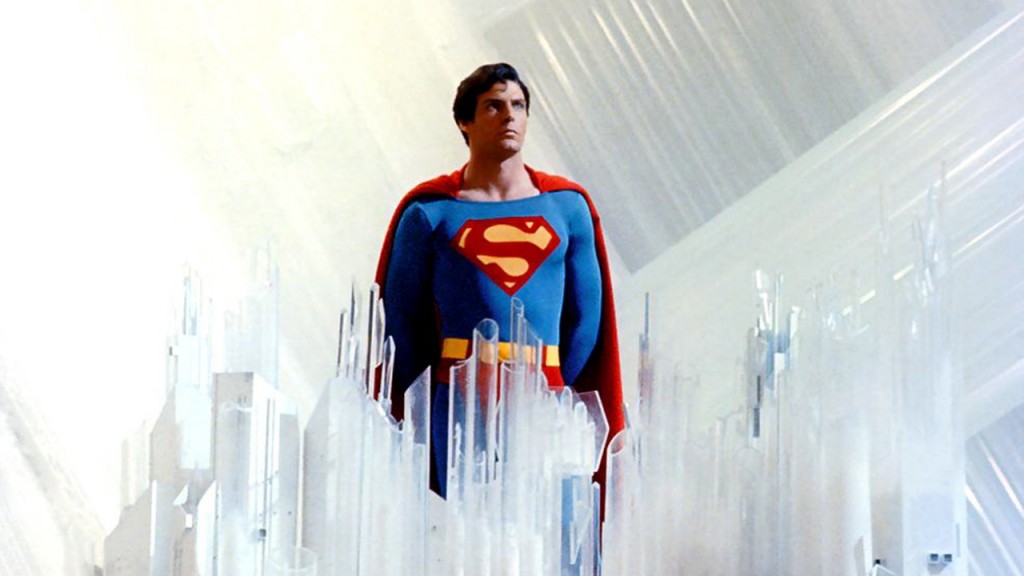
Superman Memory Crystals Can Store Up to 360TB

Superman Memory Crystals Can Store Up to 360TB


Scientists are working on a new type of computer memory which would allow the safe and long-term storage of hundreds of terabytes of data. And by long term, they mean theoretically forever.
Using high speed lasers, they have been able to record and retrieve information from glass, leading to the discovery of what its inventors endearingly call Superman memory crystals.
Superman Memory Crystals Can Store Up to 360TB
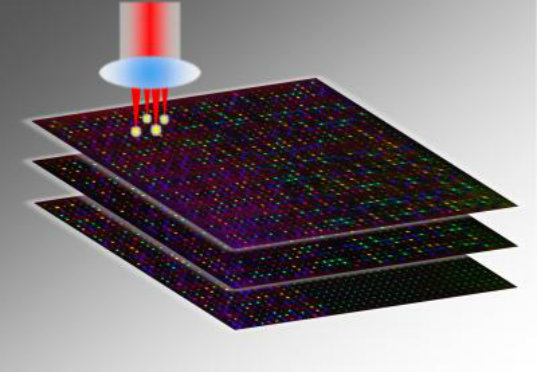
This impressive data storage system developed by University of Southampton researchers will have practically unlimited lifetime and a storage capacity of up to 360TB of data – the equivalent of 580,000 CDs.
While regular hard drive memory can last a couple of decades and is vulnerable to strong temperature variations, moisture, magnetic fields, this memory crystal is extremely dense and durable, having the potential to last indefinitely. The nanostructured glass crystal used in the research can also withstand temperatures of up to 1,800° F.
How it works
The data is written on the memory crystal, which is about the size of a normal CD, with a femtosecond laser (femtosecond stands for a millionth of a billionth of a second).
The information is encoded in five dimensions – the dimensional position of the glass nanostructures plus intensity and polarization of the laser beam, making for what researchers named 5D data storage.
The process used practically changes the manner in which light travels through glass and thus creates polarized light which can be read with a polarizer and an optical microscope, just like the data in optical fibers.
memory crystal
Researchers have already been able to successfully record and retrieve a 300kb text file. Interestingly enough, the memory crystal would work just like a rewritable disc, meaning that the stored information can be erased and replaced with new data. The current writing speed is 12 Kbit/s, but scientists hope this can rise to about 8 Mbit/s and even several Gbit/s with future research.
This Superman memory crystal can have multiple uses in fields for storage of high capacity important data. Not to mention the obvious use any sci-fi fan has already considered: storing the entire history of humankind for the next generations or for some alien race that may stumble upon our planet long after humans are extinct.

Monday, 15 July 2013

Apple said to be working on ad-skipping tech for TV

A new report says Apple's trying to woo cable companies on ad-skipping technology for TV programs.
There's new fuel for the fire that Apple's working on technology for an updated TV set-top box or TV platform.
Citing unnamed sources, tech writer Jessica Lessin (formerly of The Wall Street Journal), says Apple's been meeting with cable companies to pitch a service that would enable TV viewers to skip commercials.
That feature would be worked into a "premium" service Apple TV owners would buy into, the report says, adding that Apple would then pay networks when it occurred.
Apple's TV set-top box remains limited to prerecorded content instead of live TV channels, though that's expected to change. Apple has dabbled in offering live programming, but only its own presentations, like keynote addresses and concerts. A series of rumors has pointed toward the company expanding from selling content a la carte to a subscription that would rival what people purchase from their cable providers. Earlier this month, Apple was said to be in late-stage talks with Time Warner Cable to add live channels to the set-top box, presumably inside an app.
Apple would not be the first company to offer users a way to skip ads on TV programming. TiVo and ReplayTV offered the feature to consumers more than a decade ago, and it's since permeated to the DVRs cable providers offer to customers. More recently, companies like Dish and its Hopper technology can skip commercial blocks, though the feature can be limited on certain programming and has raised legal ire from major broadcast networks which say it violates copyright law. (Disclosure: CBS is one of those broadcast networks, and CBS Interactive is the publisher of CNET News).
Apple declined to comment on the report, calling it rumor and speculation.

Bill Gates says Microsoft Bob will make a comeback

Speaking Monday at the Microsoft Research event, the chairman said Microsoft Bob didn't get it right, but he thinks the personal assistant feature will reemerge with a bit more sophistication

Rick Rashid, former head of Microsoft Research, and Bill Gates take questions at the Microsoft Research Faculty Summit at the company's Redmond, Wash., headquarters.
(Credit: Microsoft) Bill Gates thinks that Microsoft Bob, or at least the concept, will come back to life as intelligent personal agents become part of everyday computing. Microsoft Bob, introduced by Gates at the Consumer Electronics Show in January 1995, provided a virtual house with rooms and doors and cartoon character assistants to help users navigate Windows and perform tasks with Microsoft applications. For example, users could log in by clicking on a door knocker or launch the calendar application by clicking on a calendar hanging on a wall. (Read Harry McCracken's fine history of Microsoft Bob.)
Speaking Monday at the Microsoft Research Faculty Summit at the company's Redmond, Wash., headquarters, the chairman said Microsoft Bob didn't get it right, but he thinks the concept will reemerge with a bit more sophistication. "We were just ahead of our time, like most of our mistakes," he said.
Microsoft Bob for Windows 3.1 circa 1995.
(Credit: Microsoft)
Microsoft Bob failed to impress users, who were content to live with their simple icons and folders and without cute dogs providing instructions in cartoon bubbles. Bob lived a brief, much pilloried life, exiting the stage in early 1996. But the idea persisted in the Office assistant helper, Clippy, also a subject of derision by critics and featured in Microsoft Office 97 through 2003.
The new generation of personal agents will be more adept at planning activities, such as finding a gift or organizing a trip in a certain way, Gates said. Microsoft Bob won't come back as a dog, but will morph into a disembodied voice from the cloud. Wrapped in the Windows 8 tiled interface, the new Bob will "understand" all that you do -- or are willing to share online -- as well as anticipate your needs and present relevant information anytime, anywhere, and on any device. So far, Apple's Siri and Google Now are alone in providing modestly intelligent personal assistance from the cloud. Bob needs to get back to work. In fact, he should talk to Larry at Microsoft Research.

Microsoft cuts price on Surface RT tablets by up to 30 percent

Tech titan reduces the prices to two of its in-house tablets by $150 in apparent attempt to drum up sales.
Microsoft cut the prices on its Surface RT tablets on Sunday by as much as 30 percent as the company tries to boost lackluster sales of the in-house tablets.
The software giant's entry-level 32GB model without a touch keyboard was reduced from $499 to $349, while the 64GB model's price was also reduced by $150, now selling for $499, a price cut of 25 percent.
The price cuts come a few weeks after Microsoft reduced the price of a version of the tablet for schools and universities for a two-month window this summer. Under that program, Surface RTs without keyboards sell for as low as $199.
Before that, Microsoft was offering substantial discounts on Surface RT and Surface Pro devices to attendees of some of its recent conferences. Microsoft also tried to drum up Surface RT sales in May by kicking in a free cover.
Sales of Surface RT tablets, which debuted a year ago, have been seen as tepid. In March, Bloomberg reported that Microsoft likely sold around 1.5 million Surface tablets to date. Though 1 million of those sales were for the RT version, that number was about half of what Microsoft initially expected, according to Bloomberg.

Moto X will sport always-on voice commands, leaked video shows

New voice command feature will allow users to initiate commands without touching a button, according to a new purported demonstration video.
If you ever get the feeling that no one is listening when you pick up your smartphone, it appears you won't have that problem with the Moto X.
Motorola's new flagship smartphone, which is expected to be released later this summer, will sport an always-on voice command feature that will allow users to initiate commands without touching a button on the handset, according to a new demonstration video that appears to come from Canadian wireless carrier Rogers. First spotted by Ausdroid, the video shows a user retrieving weather information on the handset by speaking the words, "OK Google Now."
"Your Moto X is ready to listen and respond. Talk to it and it learns your voice. With the power of Google Now, it tells you what you need to know even when you're not touching the screen," according to the video.

The video also shows off a feature called "Active Updates," a discreet notification system meant to deliver useful information automatically and instantly.
"Instead of a blinking light that doesn't actually tell you anything, information quietly appears on the screen," the video says.
The video also shows new photo features that allow users to launch the camera with a twist of the wrist and snap photos by tapping any where on the screen.
Motorola representatives declined to comment on the video.
The Moto X, the first flagship handset released by Motorola Mobility since being acquired by the Web giant a year ago, represents Motorola's best chance in years to make inroads against Apple and Samsung. Google is reportedly expected to allow the unit to spend up to $500 million marketing the highly anticipated smartphone in the U.S. and overseas.